Converting currency using the exchange rate formula manually might sound like a task reserved for financial experts, but it’s actually a straightforward process anyone can master. Whether you’re planning an international trip, sending money abroad, or simply curious about how much your savings are worth in another currency, understanding this formula empowers you to make informed financial decisions. The exchange rate isn’t just a number—it’s a dynamic reflection of economic forces, market demand, and global trade. By learning to calculate conversions manually, you gain control over your finances, avoid hidden fees from digital converters, and develop a deeper appreciation for how money moves across borders. This guide will walk you through the entire process, from understanding the basics to applying advanced techniques, so you can convert currencies with confidence.
What Is the Exchange Rate Formula?
The exchange rate formula is a simple mathematical equation used to determine how much one currency is worth in terms of another. In its most basic form, it looks like this: Amount in Target Currency = Amount in Original Currency × Exchange Rate. For example, if you have 100 US dollars and the exchange rate to euros is 0.92, multiplying 100 by 0.92 gives you 92 euros. This formula is the backbone of all currency conversions, whether you’re dealing with cash, bank transfers, or digital payments. While online tools and apps can do this instantly, knowing the formula lets you verify calculations, spot discrepancies, and adapt to situations where technology isn’t available.
Exchange rates come in two main types: direct and indirect. A direct rate tells you how much of the foreign currency one unit of your home currency buys (e.g., 1 USD = 0.92 EUR). An indirect rate does the opposite, showing how much of your home currency one unit of the foreign currency buys (e.g., 1 EUR = 1.09 USD). The formula works the same way for both, but you’ll need to adjust which currency is the “base” and which is the “target.” Understanding this distinction is crucial for accurate conversions, especially when dealing with fluctuating rates or cross-currency pairs like GBP to JPY.
Related Posts
- Slope of a Line Formula: How to Calculate Slope Using Two Points
- Master Permutation & Combination: Formulas Made Easy for Beginners
- Speed Distance Time Formula Explained: Your Step-by-Step Guide
- simple way to calculate body fat percentage at home manually
- how to convert speed from kmh to ms with formula
Why Manual Calculations Matter
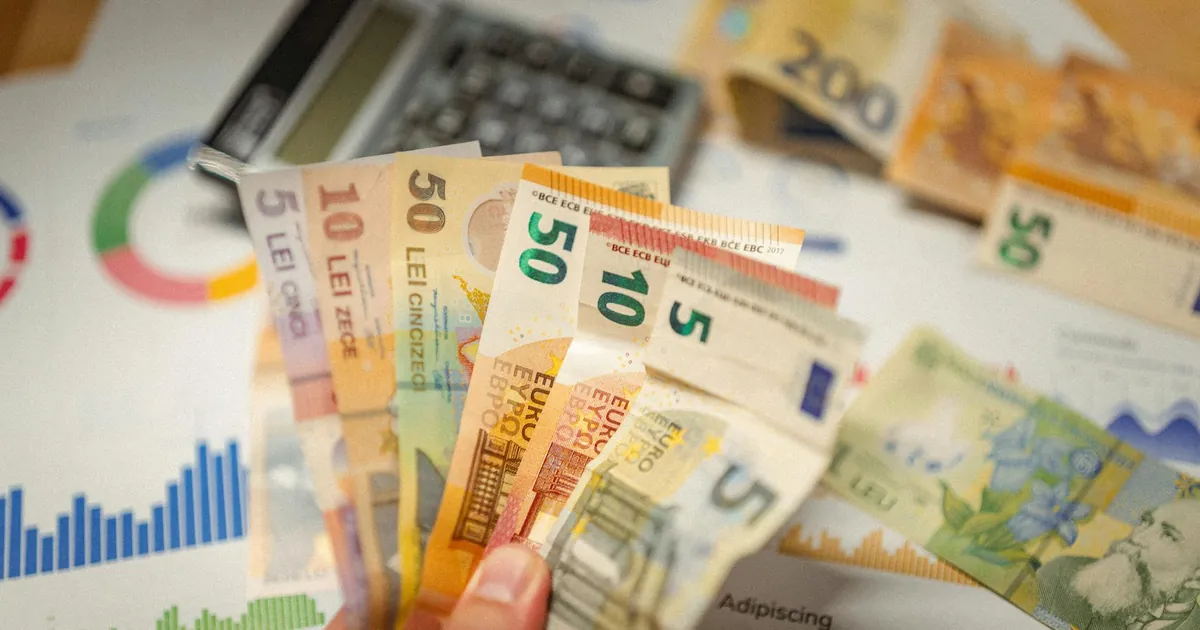
In an era where digital tools dominate, you might wonder why anyone would bother with manual calculations. The answer lies in transparency and control. Banks, airports, and even some online converters often add hidden fees or use unfavorable rates, costing you more than necessary. By calculating conversions yourself, you can compare rates from different sources, negotiate better deals, and avoid overpaying. For instance, if you’re exchanging cash at a kiosk, knowing the exact rate lets you spot when you’re being charged a premium. Similarly, if you’re sending money abroad, manual calculations help you choose the most cost-effective service.
Manual conversions also build financial literacy. When you understand how exchange rates work, you start noticing patterns—like how political events or economic reports can cause rates to spike or drop. This knowledge is invaluable for travelers, expats, and investors who need to time their transactions for the best possible rates. Plus, it’s a practical skill that can save you money in real-world scenarios, from splitting a bill with friends abroad to budgeting for a long-term stay in another country.
Common Misconceptions About Exchange Rates
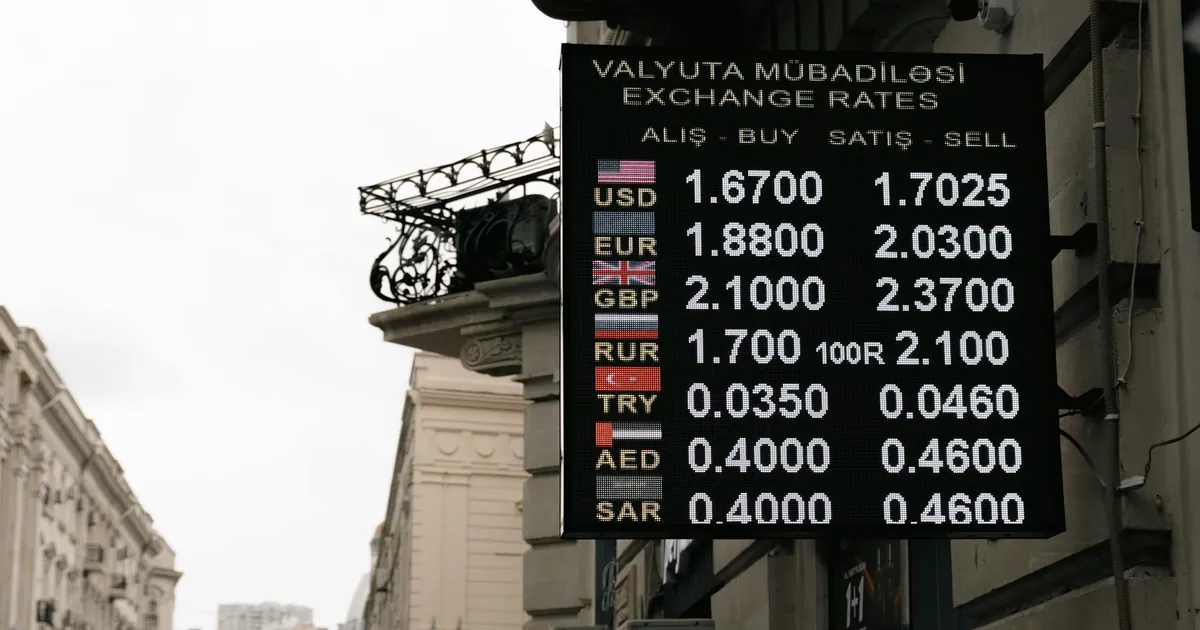
Many people assume that exchange rates are fixed or that all providers offer the same rate. In reality, rates fluctuate constantly due to market forces, and different providers (banks, exchange bureaus, online platforms) may offer slightly different rates. Another myth is that the “official” rate you see online is the one you’ll always get. In practice, providers often add a spread—a markup that increases their profit. For example, if the market rate is 1 USD = 0.92 EUR, a bank might offer 1 USD = 0.90 EUR, pocketing the difference.
Some also believe that converting currency is as simple as swapping numbers, but factors like transaction fees, commission charges, and dynamic pricing can complicate the process. For instance, credit card companies might charge a foreign transaction fee (usually 1–3%) on top of the exchange rate. By understanding these nuances, you can minimize costs and make smarter financial decisions.
Step-by-Step Guide to Manual Currency Conversion
Converting currency manually is easier than you think. Start by identifying the exchange rate for the currencies you’re working with. You can find this on financial news websites, central bank portals, or even Google by typing “USD to EUR exchange rate.” Once you have the rate, decide whether it’s direct or indirect. If it’s direct (e.g., 1 USD = 0.92 EUR), you’ll multiply your original amount by the rate to get the target currency. If it’s indirect (e.g., 1 EUR = 1.09 USD), you’ll divide your original amount by the rate instead.
Let’s say you want to convert 500 USD to euros using a direct rate of 1 USD = 0.92 EUR. Multiply 500 by 0.92, and you get 460 euros. If you’re using an indirect rate, like 1 EUR = 1.09 USD, you’d divide 500 by 1.09, which also gives you approximately 458.72 euros. The slight difference comes from rounding, but both methods are correct. The key is consistency—stick to one type of rate for your calculations to avoid confusion.
Handling Cross-Currency Conversions
Not all currency pairs are as straightforward as USD to EUR. Some, like GBP to JPY, require an extra step because they don’t have a direct exchange rate. In these cases, you’ll need to use a cross-rate calculation. For example, if you want to convert British pounds to Japanese yen, you might first convert GBP to USD and then USD to JPY. Here’s how it works: Suppose the rate is 1 GBP = 1.25 USD and 1 USD = 150 JPY. To find out how many yen you’d get for 100 GBP, first multiply 100 by 1.25 to get 125 USD, then multiply 125 by 150 to get 18,750 JPY.
Cross-currency conversions are common in forex trading and international business, but they’re also useful for travelers. If you’re visiting a country with a less common currency, like Thailand or South Africa, you might need to convert your money through an intermediary currency like USD or EUR. While this adds complexity, it’s a reliable way to ensure you’re getting a fair rate. Just remember to account for any additional fees that might apply during the conversion process.
Adjusting for Fees and Commissions
Even if you’ve mastered the exchange rate formula, fees can throw off your calculations. Banks, exchange bureaus, and online platforms often charge a commission (a fixed fee per transaction) or a spread (a percentage added to the rate). For example, if a bureau charges a 2% commission on top of the exchange rate, you’ll need to subtract that from your final amount. Let’s say you’re converting 1,000 USD to euros at a rate of 0.92, but the bureau takes a 2% cut. First, calculate the conversion: 1,000 × 0.92 = 920 euros. Then, subtract 2% of 920 (18.40 euros), leaving you with 901.60 euros.
To minimize fees, compare rates from multiple providers before converting. Online platforms like Wise or Revolut often offer better rates than traditional banks, while airport kiosks tend to have the worst. If you’re exchanging cash, ask about the total cost upfront—some places advertise “zero commission” but compensate by offering a worse exchange rate. Being aware of these tactics helps you keep more of your money.
Tools and Resources to Verify Your Calculations

While manual calculations are empowering, it’s always good to double-check your work. Several free tools can help you verify your conversions, including XE.com, OANDA, and Google’s currency converter. These platforms provide real-time rates and even historical data, so you can see how rates have changed over time. For example, if you’re converting a large sum, you might want to track the rate for a few days to time your transaction when it’s most favorable.
Another useful resource is your bank’s or credit card’s foreign exchange policy. Many financial institutions publish their rates and fees online, so you can compare them with market rates. Some banks also offer rate alerts, notifying you when a currency reaches your desired level. For travelers, apps like Trail Wallet or Splitwise can help track expenses in multiple currencies, ensuring you stay within budget. While these tools are convenient, they’re no substitute for understanding the underlying math—especially in situations where you can’t rely on technology.
Using Spreadsheets for Complex Conversions
If you frequently deal with multiple currencies, a spreadsheet can streamline your calculations. Programs like Microsoft Excel or Google Sheets allow you to create formulas that automatically update when exchange rates change. For example, you can set up a table with columns for the original amount, exchange rate, and converted amount, then use a simple multiplication formula to populate the results. This is especially useful for businesses that need to convert invoices or payroll across different currencies.
Spreadsheets also let you experiment with different scenarios. For instance, you can create a “what-if” analysis to see how a 5% change in the exchange rate would affect your budget. This is particularly valuable for investors or expats who need to plan for currency fluctuations. To get started, you can find free templates online or build your own using basic formulas like =A2*B2 (where A2 is the original amount and B2 is the exchange rate). With a little practice, you’ll be able to handle even the most complex conversions with ease.
Historical Exchange Rate Data
Understanding how exchange rates have behaved in the past can help you make better decisions in the present. Websites like Federal Reserve Economic Data (FRED) or OANDA’s historical rates tool provide decades of data for major currency pairs. For example, if you’re planning to convert a large sum of money, you might want to check whether the current rate is high or low compared to historical averages. If it’s unusually high, you might decide to wait for a better opportunity.
Historical data is also useful for travelers who want to budget accurately. If you’re visiting a country with a volatile currency, like Argentina or Turkey, knowing how the rate has fluctuated in the past can help you estimate costs more realistically. Some platforms even offer rate forecasts, though these should be taken with a grain of salt—no one can predict the future with certainty. Still, combining historical data with current trends gives you a more informed perspective.
Real-World Examples of Manual Currency Conversion
Let’s put the exchange rate formula into practice with a few real-world scenarios. Imagine you’re a traveler in Japan with 50,000 yen left over from your trip, and you want to know how much it’s worth in US dollars. You check the exchange rate and see that 1 USD = 150 JPY. To convert yen to dollars, you’ll use the indirect rate formula: Amount in USD = Amount in JPY ÷ Exchange Rate. So, 50,000 ÷ 150 = 333.33 USD. If you’re exchanging cash at a bureau, you might get slightly less due to fees, but this gives you a baseline.
Now, let’s say you’re an online seller who just received a payment of 200 euros from a customer in Germany. You want to know how much that is in British pounds. The current rate is 1 EUR = 0.85 GBP. Using the direct rate formula: Amount in GBP = Amount in EUR × Exchange Rate, you multiply 200 by 0.85 to get 170 GBP. If your bank charges a 1% fee, you’d subtract 1.70 GBP, leaving you with 168.30 GBP. These examples show how the formula applies to everyday situations, from travel to e-commerce.
Converting for International Investments
Investors often need to convert currencies when buying foreign stocks, bonds, or real estate. For example, if you’re a US investor buying shares in a European company priced in euros, you’ll need to convert your dollars to euros first. Suppose the stock costs 1,000 euros, and the exchange rate is 1 USD = 0.92 EUR. To find out how many dollars you need, use the indirect rate formula: Amount in USD = Amount in EUR ÷ Exchange Rate. So, 1,000 ÷ 0.92 = 1,086.96 USD. If the stock price changes or the exchange rate fluctuates, your cost will change too, which is why investors often use hedging strategies to lock in rates.
Currency conversion is also important for dividend payments. If you own shares in a foreign company that pays dividends in its local currency, you’ll need to convert those payments back to your home currency. For instance, if you receive 500 GBP in dividends and the exchange rate is 1 GBP = 1.25 USD, you’d multiply 500 by 1.25 to get 625 USD. However, if the pound weakens against the dollar, your dividend’s value in USD will decrease. This is why some investors prefer to hold assets in their home currency or use financial instruments to mitigate risk.
Budgeting for Long-Term Travel
If you’re planning to live abroad for an extended period, manual currency conversion becomes a daily necessity. Let’s say you’re moving from Canada to Australia and have a monthly budget of 3,000 CAD. To see how much that is in Australian dollars, you’d check the exchange rate (e.g., 1 CAD = 1.10 AUD) and multiply 3,000 by 1.10 to get 3,300 AUD. However, this is just the starting point—you’ll also need to account for cost of living differences, like rent, groceries, and transportation, which may not align with the exchange rate.
To create a realistic budget, track your expenses in both currencies for a few months. You might find that some things are cheaper in your new country (e.g., dining out) while others are more expensive (e.g., imported goods). Apps like Numbeo can help you compare living costs, but nothing beats firsthand experience. By mastering manual conversions, you’ll be able to adjust your budget on the fly and avoid financial surprises.
Key Takeaways
- The exchange rate formula is Amount in Target Currency = Amount in Original Currency × Exchange Rate (for direct rates) or Amount in Target Currency = Amount in Original Currency ÷ Exchange Rate (for indirect rates).
- Direct rates show how much foreign currency one unit of your home currency buys, while indirect rates show the opposite.
- Manual calculations help you avoid hidden fees, spot unfavorable rates, and make informed financial decisions.
- Cross-currency conversions require an extra step, often involving an intermediary currency like USD or EUR.
- Always account for fees, commissions, and spreads when converting currency to avoid overpaying.
- Use tools like XE.com, OANDA, or spreadsheets to verify your calculations and track historical rates.
- Real-world applications include travel, e-commerce, investing, and long-term budgeting in foreign countries.
“Understanding the exchange rate formula isn’t just about math—it’s about financial empowerment. When you know how to convert currencies manually, you’re no longer at the mercy of banks or exchange bureaus. You can negotiate better rates, time your transactions, and even spot opportunities for arbitrage. In a globalized world, this skill is as essential as knowing how to balance a checkbook.”
— Sarah Johnson, Senior Financial Analyst at Forbes
Frequently Asked Questions
Why do exchange rates change so frequently?
Exchange rates fluctuate due to a variety of factors, including interest rates, inflation, political stability, and market speculation. For example, if a country’s central bank raises interest rates, its currency often strengthens because investors seek higher returns. Similarly, political uncertainty can cause a currency to weaken as investors pull their money out. These changes happen in real-time, which is why rates can shift multiple times a day. Even small movements can have a big impact when converting large sums of money.
Is it better to exchange currency at a bank or a bureau?
It depends on the rates and fees. Banks often offer competitive rates but may charge higher fees or require you to be a customer. Exchange bureaus, especially those in airports or tourist areas, tend to have worse rates but may offer convenience. Online platforms like Wise or Revolut usually provide the best rates with lower fees. To get the best deal, compare rates from multiple sources before converting. Also, avoid exchanging money at airports unless it’s an emergency—rates there are typically the worst.
How do I know if I’m getting a fair exchange rate?
The fairest rate is usually the mid-market rate, which is the midpoint between the buy and sell prices of a currency pair. You can find this rate on financial news websites or platforms like XE.com. If a provider’s rate is significantly worse than the mid-market rate, they’re likely adding a markup. For example, if the mid-market rate is 1 USD = 0.92 EUR but a bureau offers 1 USD = 0.90 EUR, they’re taking a 2% cut. Always ask for the total cost upfront, including any fees or commissions.
Can I use the same formula for digital payments?
Yes, the exchange rate formula applies to digital payments, but you’ll need to account for additional factors like foreign transaction fees or dynamic currency conversion. For example, if you use a credit card abroad, your bank might charge a 1–3% fee on top of the exchange rate. Some merchants also offer “dynamic currency conversion,” where they let you pay in your home currency instead of the local one. While this might seem convenient, it often comes with a worse rate, so it’s usually better to pay in the local currency.
What’s the difference between a fixed and floating exchange rate?
A fixed exchange rate is set by a country’s government or central bank and doesn’t change much. For example, the Saudi riyal is pegged to the US dollar at a fixed rate of 3.75 SAR = 1 USD. A floating exchange rate, on the other hand, is determined by market forces and can fluctuate daily. Most major currencies, like the US dollar, euro, and Japanese yen, use floating rates. Fixed rates provide stability but can be harder to maintain, while floating rates reflect economic conditions more accurately but can be volatile.
How do I convert currency for cryptocurrencies?
Converting traditional currency to cryptocurrencies like Bitcoin or Ethereum follows a similar process, but the exchange rate is determined by the cryptocurrency market. For example, if 1 BTC = 50,000 USD and you want to buy 0.1 BTC, you’d multiply 0.1 by 50,000 to get 5,000 USD. However, cryptocurrency rates can be highly volatile, so it’s important to check the current rate before making a transaction. Platforms like Coinbase or Binance provide real-time rates and allow you to convert between fiat currencies and cryptocurrencies.
What should I do if I get a bad exchange rate?
If you realize you’ve received a bad rate, you have a few options. First, check if the provider offers a rate guarantee or a price match policy. Some online platforms will refund the difference if you find a better rate elsewhere. If you’re exchanging cash, you can try negotiating with the bureau—some may adjust the rate if you’re converting a large amount. For digital transactions, contact your bank or payment provider to dispute the charge. In the future, always compare rates before converting and avoid last-minute exchanges, which often come with worse rates.
Mastering the exchange rate formula is more than just a mathematical exercise—it’s a gateway to smarter financial decisions. Whether you’re traveling, investing, or simply sending money to family abroad, knowing how to convert currencies manually gives you the confidence to navigate the global economy. Start by practicing with small amounts, then gradually apply the formula to more complex scenarios. Over time, you’ll develop an intuitive sense for exchange rates, allowing you to spot opportunities and avoid costly mistakes. The next time you need to convert currency, don’t just rely on a calculator—take control of the process and see how much you can save.