
Calculating area and volume for basic shapes is the foundation of geometry that unlocks real-world problem-solving—from designing a cozy living room to engineering skyscrapers. Whether you’re a student tackling homework, a DIY enthusiast measuring materials, or a professional ensuring precision in construction, mastering these formulas saves time, reduces waste, and prevents costly mistakes. The beauty of geometry lies in its simplicity: a handful of equations govern everything from the square footage of your floor to the capacity of a water tank. Yet, many people struggle to recall these formulas when they need them most. This guide demystifies the process, breaking down each shape into clear, actionable steps while sharing practical tips to avoid common pitfalls. By the end, you’ll not only memorize the formulas but understand the logic behind them, making calculations second nature.
What Are Area and Volume? A 40-Word Definition
Area measures the two-dimensional space a shape occupies, expressed in square units like cm² or ft². Volume calculates the three-dimensional space an object fills, measured in cubic units such as m³ or in³. Both concepts are essential for construction, design, and everyday measurements, bridging abstract math with tangible applications.
Understanding the Basics: Why Formulas Matter
Before diving into calculations, it’s worth asking: why do these formulas exist? Geometry isn’t just about memorizing equations—it’s about solving problems efficiently. Ancient civilizations like the Egyptians and Babylonians developed early versions of these formulas to build pyramids, divide land, and manage resources. Today, the same principles apply, whether you’re calculating how much paint to buy for a wall or determining the storage capacity of a shipping container. The key is recognizing that area and volume are about space—how much of it a shape covers or contains. Once you grasp this, the formulas become tools rather than abstract rules.
Related Posts
- how to convert time zones manually without calculator
- how to calculate calorie needs per day step by step formula
- How to Calculate Profit Margin Percentage: Step-by-Step Guide for Beginners
- Straight Line Depreciation Formula Explained: Step-by-Step Solved Example
- Master Permutation & Combination: Formulas Made Easy for Beginners
For example, imagine you’re tiling a bathroom floor. Without knowing the area, you might buy too few tiles (leaving gaps) or too many (wasting money). The formula for a rectangle’s area (length × width) isn’t just a math problem—it’s a way to ensure your project stays on budget and on schedule. Similarly, volume formulas help chefs measure ingredients, engineers design fuel tanks, and even gamers optimize 3D models. The applications are endless, but they all start with the same foundational equations.
Real-World Applications of Area and Volume
Area and volume aren’t confined to textbooks. Here’s where you’ll encounter them in daily life:
- Home Improvement: Calculating wall area for paint, flooring for carpet, or volume for concrete in a driveway.
- Cooking and Baking: Measuring the volume of ingredients in recipes or the capacity of pots and pans.
- Packaging and Shipping: Determining how much a box can hold or how many items fit in a warehouse.
- Landscaping: Estimating the area of a garden bed or the volume of soil needed for a raised planter.
- Sports and Recreation: Designing fields (e.g., soccer pitch area) or calculating the volume of water in a swimming pool.
Common Mistakes to Avoid

Even simple calculations can go wrong if you’re not careful. Here are pitfalls to watch for:
- Mixing Units: Always ensure measurements are in the same unit before calculating. For example, don’t multiply feet by inches without converting first.
- Ignoring Shape Complexity: A shape that looks like a rectangle might have irregular edges. Break it into simpler shapes if needed.
- Forgetting π (Pi): Circular shapes require π (≈3.1416) in their formulas. Using 3 or 3.14 can lead to significant errors in large-scale projects.
- Confusing Area and Volume: Area is 2D (e.g., floor space), while volume is 3D (e.g., room capacity). Double-check which one you need.
Calculating Area for 2D Shapes
Two-dimensional shapes are the building blocks of geometry. Their areas are calculated using straightforward formulas, but each shape has unique quirks. Let’s explore the most common ones, starting with the simplest: squares and rectangles. These shapes are everywhere—from sheets of paper to football fields—and their area formulas are the easiest to remember. The key is to identify the base and height (or length and width) and multiply them. But what happens when the shape isn’t a perfect rectangle? That’s where triangles, circles, and trapezoids come into play.
For triangles, the formula is ½ × base × height. This makes sense because a triangle is essentially half of a rectangle. Circles, on the other hand, introduce π into the mix. The area of a circle is π × radius², where the radius is half the diameter. Trapezoids combine elements of rectangles and triangles, using the formula ½ × (base₁ + base₂) × height. Each of these shapes requires careful measurement, but once you understand the logic, the formulas become intuitive.
Step-by-Step Guide to Rectangle and Square Area
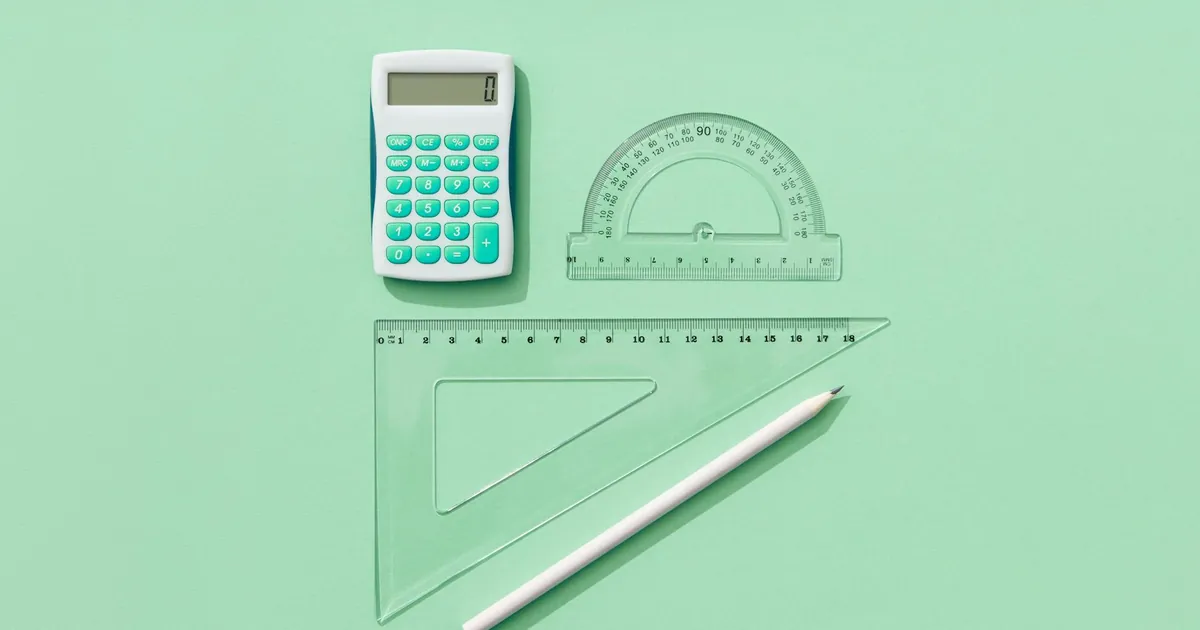
Rectangles and squares are the most straightforward shapes to measure. Here’s how to calculate their area:
- Measure the Length: Use a ruler, tape measure, or laser tool to find the longest side (length).
- Measure the Width: Find the shorter side (width) perpendicular to the length.
- Multiply Length × Width: The result is the area in square units (e.g., cm², ft²).
- Double-Check Units: Ensure both measurements are in the same unit before multiplying.
For example, a rectangular garden measuring 12 feet long and 8 feet wide has an area of 12 × 8 = 96 ft². Squares are even simpler because all sides are equal. A square with 5-meter sides has an area of 5 × 5 = 25 m².
Mastering Triangle Area Calculations
Triangles can be trickier because they come in different types: equilateral, isosceles, and scalene. However, the area formula remains the same. Here’s how to apply it:
- Identify the Base: Choose any side as the base (usually the longest for simplicity).
- Find the Height: Measure the perpendicular distance from the base to the opposite vertex (not the length of the other sides).
- Apply the Formula: Multiply the base by the height, then divide by 2.
For instance, a triangle with a base of 10 cm and a height of 6 cm has an area of ½ × 10 × 6 = 30 cm². If you’re working with a right-angled triangle, the two shorter sides can serve as the base and height, simplifying the calculation.
Volume Calculations for 3D Shapes
While area deals with flat surfaces, volume dives into the third dimension, measuring how much space an object occupies. Think of volume as the difference between a piece of paper (area) and a cardboard box (volume). The formulas for 3D shapes build on their 2D counterparts but introduce depth or height. For example, a cube’s volume is side³, while a rectangular prism’s volume is length × width × height. Cylinders and spheres add π to the mix, with cylinders using π × radius² × height and spheres using ⁴⁄₃ × π × radius³.
Volume calculations are essential in fields like architecture, manufacturing, and even medicine. A pharmacist, for instance, needs to know the volume of a liquid medication to prescribe the correct dosage. Similarly, a manufacturer must calculate the volume of raw materials to produce a product efficiently. The challenge with volume is visualizing the shape’s dimensions. Unlike area, where you can often see the entire surface, volume requires imagining the object’s depth. This is why breaking down complex shapes into simpler ones (like combining cylinders and rectangular prisms) is a valuable skill.
Cubes and Rectangular Prisms: The Easiest Volumes
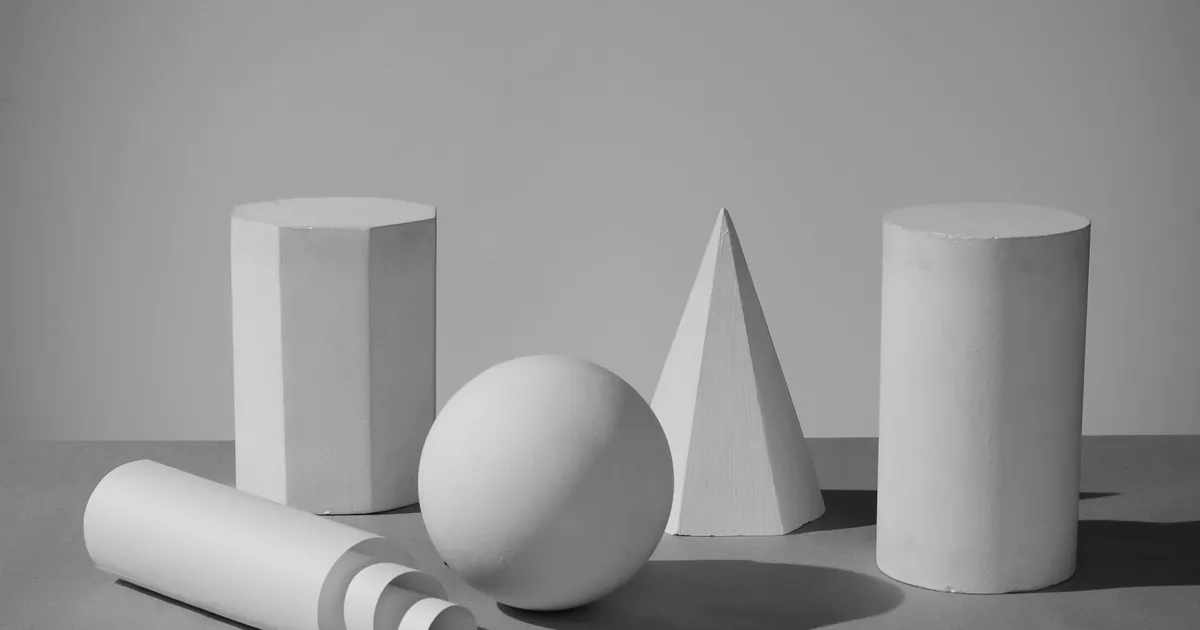
Cubes and rectangular prisms are the simplest 3D shapes to measure. Here’s how to calculate their volume:
- Cube: Measure one side (since all sides are equal) and cube it (side × side × side). For example, a 3-inch cube has a volume of 3³ = 27 in³.
- Rectangular Prism: Measure the length, width, and height, then multiply them (length × width × height). A box measuring 4 ft × 2 ft × 3 ft has a volume of 4 × 2 × 3 = 24 ft³.
These shapes are common in packaging, storage, and construction. For instance, if you’re moving, calculating the volume of your furniture helps determine how many boxes you’ll need.
Cylinders and Spheres: When π Comes into Play
Cylinders and spheres introduce π, which can complicate calculations if you’re not careful. Here’s how to tackle them:
- Cylinder: Measure the radius of the circular base and the height. The volume is π × radius² × height. For a cylinder with a 2-meter radius and 5-meter height, the volume is π × 2² × 5 ≈ 62.83 m³.
- Sphere: Measure the radius and use the formula ⁴⁄₃ × π × radius³. A sphere with a 3-foot radius has a volume of ⁴⁄₃ × π × 3³ ≈ 113.10 ft³.
These shapes appear in everyday objects like cans (cylinders) and balls (spheres). Understanding their volume helps in tasks like filling a pool (sphere-like) or determining how much soda fits in a can.
Advanced Tips for Complex Shapes

Not all shapes fit neatly into the basic categories. What if you’re dealing with a pentagon, a cone, or an irregular object? The key is to decompose the shape into simpler parts. For example, a pentagon can be divided into a rectangle and a triangle, while a cone’s volume can be calculated using ⅓ × π × radius² × height. Irregular objects, like a rock or a piece of furniture, require creative methods like the water displacement technique, where you submerge the object in water and measure the volume of water displaced.
Another advanced technique is using integration for shapes with curved surfaces, though this is more common in calculus. For practical purposes, breaking down complex shapes into basic ones is usually sufficient. For instance, a house’s volume might combine rectangular prisms (rooms), triangular prisms (roofs), and cylinders (chimneys). The more you practice, the easier it becomes to visualize and calculate these combinations.
Breaking Down Irregular Shapes
Irregular shapes can be intimidating, but they’re manageable with the right approach. Here’s how to tackle them:
- Divide into Basic Shapes: Split the shape into rectangles, triangles, circles, etc. For example, an L-shaped room can be divided into two rectangles.
- Calculate Each Part: Find the area or volume of each basic shape using the appropriate formula.
- Add or Subtract: Combine the results. For area, add the parts together. For volume, ensure you’re not double-counting overlapping sections.
For example, a garden with a rectangular section (10 m × 5 m) and a semicircular section (radius 3 m) has a total area of (10 × 5) + (½ × π × 3²) ≈ 50 + 14.14 = 64.14 m².
Using Technology for Precision

While manual calculations are valuable, technology can save time and reduce errors. Here are some tools to consider:
- Graphing Calculators: Useful for complex shapes or when dealing with π and exponents.
- 3D Modeling Software: Programs like SketchUp or AutoCAD can calculate volume automatically.
- Mobile Apps: Apps like “Area Volume Calculator” or “MagicPlan” measure spaces using your phone’s camera.
- Laser Measuring Tools: Devices like the Leica Disto provide precise measurements for large or awkward spaces.
These tools are especially helpful for professionals like architects or engineers, but even DIYers can benefit from them. For example, measuring a room’s volume for HVAC sizing is far easier with a laser tool than a tape measure.
Key Takeaways
- Area measures 2D space (e.g., floors, walls), while volume measures 3D space (e.g., rooms, containers).
- Basic area formulas include length × width (rectangles), ½ × base × height (triangles), and π × radius² (circles).
- Volume formulas build on area by adding height or depth, such as length × width × height (rectangular prisms) and π × radius² × height (cylinders).
- Complex shapes can be broken down into simpler parts for easier calculation.
- Always double-check units and avoid common mistakes like mixing measurements or forgetting π.
- Technology, like apps and laser tools, can improve accuracy and efficiency.
- Practical applications range from home improvement to engineering, making these formulas essential life skills.
Expert Insights
“Geometry isn’t just about numbers—it’s about understanding space. The most common mistake I see is people rushing through measurements without visualizing the shape. Take a moment to sketch it out, label the dimensions, and then apply the formula. This simple step reduces errors by over 50%.”
Frequently Asked Questions
What’s the difference between area and volume?
Area measures the surface of a 2D shape (e.g., a floor’s square footage), while volume measures the space a 3D object occupies (e.g., a room’s cubic footage). Area is expressed in square units (cm², ft²), and volume is in cubic units (m³, in³).
How do I calculate the area of a circle if I only know the diameter?
First, divide the diameter by 2 to find the radius. Then, use the formula π × radius². For example, a circle with a 10-inch diameter has a radius of 5 inches, so its area is π × 5² ≈ 78.54 in².
Why is the volume of a cone ⅓ of a cylinder’s volume?
A cone’s volume is ⅓ × π × radius² × height because it’s essentially a cylinder with the same base and height but tapered to a point. The “⅓” accounts for the cone’s smaller volume compared to the cylinder. This relationship was first proven by ancient Greek mathematician Archimedes.
Can I calculate the volume of an irregular object like a rock?
Yes! Use the water displacement method. Submerge the rock in a graduated cylinder filled with water and measure the change in water level. The difference equals the rock’s volume. This method is based on Archimedes’ principle and is highly accurate for small objects.
What’s the easiest way to remember these formulas?
Associate each formula with a real-world object. For example, remember that a pizza’s area is π × radius² (because it’s circular), and a shoebox’s volume is length × width × height. Mnemonics and visual aids also help—for instance, “A triangle is half a rectangle” for the triangle area formula.
Are there any shortcuts for calculating area or volume?
For regular shapes, no shortcuts beat the formulas. However, for irregular shapes, breaking them into simpler parts or using technology (like 3D scanners) can save time. Additionally, memorizing common conversions (e.g., 1 m³ = 1,000 liters) can speed up calculations.
How do professionals use these formulas in their work?
Architects use area formulas to design floor plans and volume formulas to calculate building materials. Engineers rely on them for structural integrity, while chefs use volume to scale recipes. Even artists use geometry to create proportional sculptures or paintings. These formulas are the backbone of countless industries.
Mastering area and volume calculations isn’t just about passing a math test—it’s about gaining confidence in solving real-world problems. Whether you’re planning a renovation, packing for a move, or simply curious about the world around you, these formulas are your secret weapon. Start with the basics, practice with everyday objects, and soon, you’ll see geometry everywhere. Ready to put your new skills to the test? Grab a tape measure and calculate the area of your living room or the volume of your coffee mug. The more you practice, the more intuitive it becomes.