
Quadratic equations, characterized by the general form ax² + bx + c = 0, are a fundamental topic in algebra. While calculators can quickly provide solutions, understanding the underlying methods for solving them manually provides a deeper insight into mathematical principles. Mastering these techniques not only enhances problem-solving abilities but also strengthens analytical thinking, especially valuable in situations where computational aids are unavailable. This guide explores the essential methods to solve quadratic equations step-by-step without a calculator, providing detailed explanations and practical examples to ensure clarity and comprehension. These methods are applicable across various fields, making the understanding of quadratic equations crucial for success in mathematics and related disciplines.
Factoring Quadratic Equations
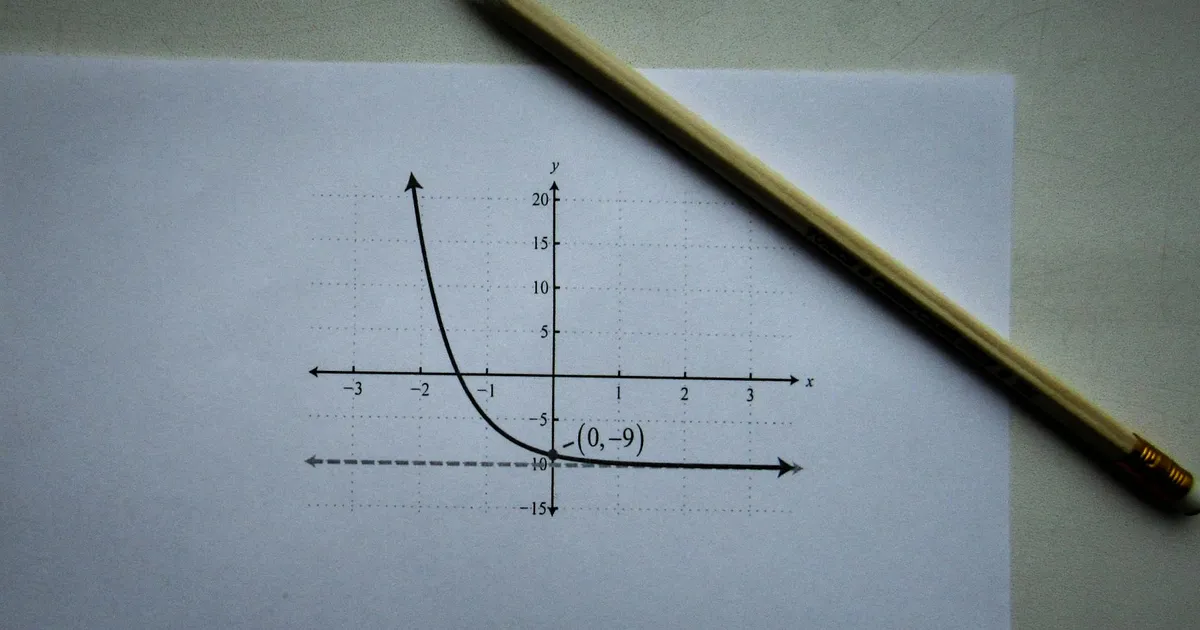
Factoring involves expressing the quadratic equation as a product of two binomials. This method is efficient when the quadratic expression can be easily factored. For example, consider the equation x² + 5x + 6 = 0. The goal is to find two numbers that multiply to 6 (the constant term) and add up to 5 (the coefficient of the x term). In this case, the numbers are 2 and 3. Therefore, the equation can be factored as (x + 2)(x + 3) = 0. Setting each factor equal to zero gives the solutions x = -2 and x = -3. Factoring is a foundational skill and understanding it deeply can aid in tackling more complex algebraic problems.
To confirm the solutions obtained through factoring, one can substitute these values back into the original equation. Using the example above, substituting x = -2 into x² + 5x + 6 yields (-2)² + 5(-2) + 6 = 4
Tips for Successful Factoring

Successfully factoring quadratic equations requires a keen eye for number patterns and algebraic manipulation. Begin by identifying the coefficients of the quadratic, linear, and constant terms. Look for common factors that can simplify the equation before attempting to factor the quadratic expression directly. If the leading coefficient (the coefficient of x²) is not 1, consider factoring it out or using techniques such as the AC method. The AC method involves finding two numbers that multiply to the product of the leading coefficient and the constant term, and add up to the coefficient of the linear term. Practice with various examples is essential to mastering factoring techniques.
Using the Square Root Property

The square root property is applicable when the quadratic equation can be written in the form (x + a)² = b. To solve such equations, take the square root of both sides. Remember to consider both the positive and negative square roots, as both will satisfy the equation. For example, consider the equation (x
When applying the square root property, it is crucial to isolate the squared expression on one side of the equation before taking the square root. This ensures that the solutions obtained are accurate and valid. If the constant term under the square root is negative, the solutions will be complex numbers, involving the imaginary unit ‘i,’ where i² = -1. This concept extends the applicability of quadratic equations into more advanced domains of mathematics. Resources from institutions like MIT OpenCourseWare can provide further insights into advanced algebraic techniques.
Completing the Square

Completing the square is a versatile method that can be used to solve any quadratic equation. It involves transforming the equation into the form (x + h)² = k. To do this, start by ensuring that the coefficient of x² is 1. If it is not, divide the entire equation by that coefficient. Next, move the constant term to the right side of the equation. Then, add the square of half the coefficient of the x term to both sides of the equation. This completes the square on the left side, allowing it to be written as a perfect square binomial. For example, to solve x² + 6x + 5 = 0 by completing the square, first rewrite it as x² + 6x = -5. Half of 6 is 3, and 3 squared is 9. Add 9 to both sides: x² + 6x + 9 = -5 + 9, which simplifies to (x + 3)² = 4. Apply the square root property as previously described.
When completing the square, it is important to meticulously manage each step to maintain the balance of the equation and avoid errors. Pay close attention to the signs and the numerical values when adding the square of half the coefficient of the x term. After completing the square, verify that the resulting expression is indeed a perfect square binomial before proceeding to take the square root. This methodical approach minimizes mistakes and fosters a deeper understanding of the algebraic manipulations involved. Educational platforms such as Brilliant.org offer interactive problem-solving modules to help master this technique.
Applying the Quadratic Formula
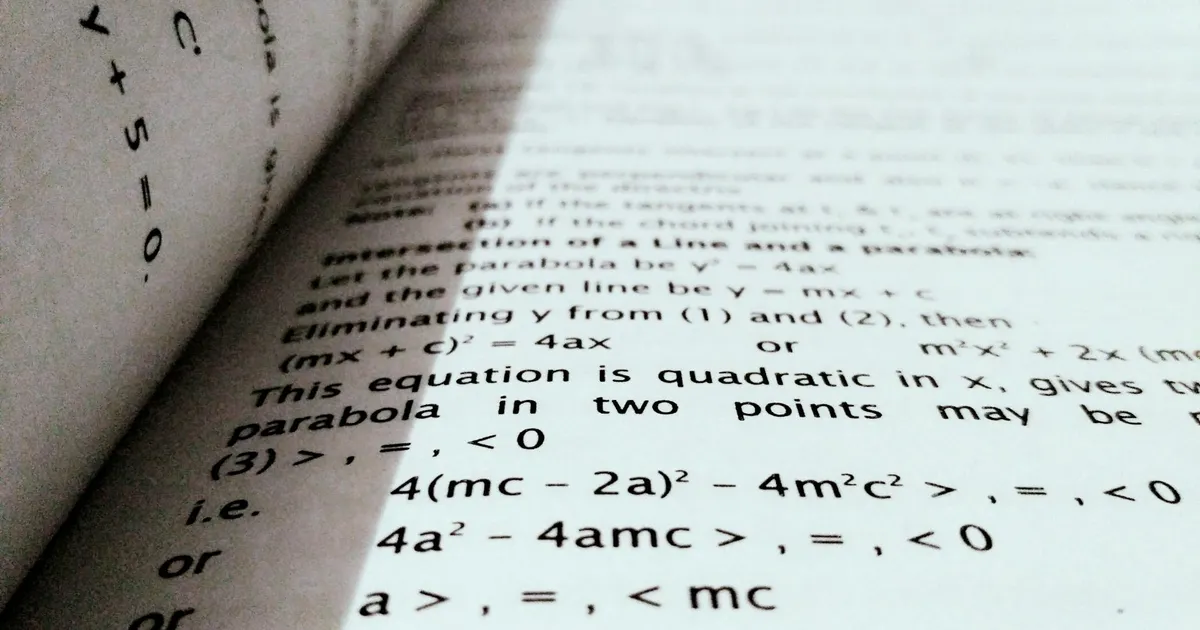
The quadratic formula is a universal method for solving quadratic equations, regardless of their factorability. Given the general form ax² + bx + c = 0, the quadratic formula is x = [-b ± √(b²
The expression b²
< 0, the equation has two complex roots. Understanding the discriminant helps in predicting the type of solutions to expect. Wolfram Alpha is an excellent tool for verifying the solutions obtained using the quadratic formula and understanding its applications.
Analyzing the Discriminant
The discriminant, b²
< 0) indicates two complex solutions, implying the parabola does not intersect the x-axis.
Understanding the relationship between the discriminant and the graph of the quadratic equation provides a visual and intuitive understanding of the solutions. For instance, if the discriminant is negative, the parabola either opens upwards and lies entirely above the x-axis, or opens downwards and lies entirely below the x-axis, indicating no real roots. The discriminant also plays a crucial role in various applications of quadratic equations, such as optimization problems and analyzing the stability of systems. Textbooks on advanced algebra from publishers like Springer offer comprehensive coverage of these topics.
Graphical Solutions

Graphing quadratic equations provides a visual method to approximate their solutions. The graph of a quadratic equation is a parabola. The x-intercepts of the parabola represent the real solutions (roots) of the quadratic equation. To solve a quadratic equation graphically, plot the parabola corresponding to the equation y = ax² + bx + c. The points where the parabola intersects the x-axis (y = 0) are the solutions. If the parabola does not intersect the x-axis, the equation has no real solutions, indicating complex roots. While this method may not provide exact solutions, it gives a good approximation and helps visualize the nature of the roots.
When graphing quadratic equations, key features such as the vertex, axis of symmetry, and direction of opening (upwards or downwards) are important. The vertex represents the minimum or maximum point of the parabola, and its x-coordinate is given by -b / (2a). The axis of symmetry is a vertical line passing through the vertex, dividing the parabola into two symmetric halves. The direction of opening depends on the sign of the leading coefficient ‘a’. If ‘a’ is positive, the parabola opens upwards; if ‘a’ is negative, it opens downwards. These features help in accurately sketching the parabola and identifying the solutions. Interactive graphing tools like Desmos aid the process of visualizing quadratic equations in 2026.
Key Takeaways
- Factoring is an efficient method when the quadratic expression can be easily factored.
- The square root property is useful when the equation is in the form (x + a)² = b.
- Completing the square is a versatile method that can solve any quadratic equation by transforming it to a perfect square.
- The quadratic formula provides a universal solution for any quadratic equation: x = [-b ± √(b²
- 4ac)] / (2a).
- The discriminant (b²
- 4ac) determines the nature of the roots (real, repeated, or complex).
- Graphical solutions involve plotting the parabola and finding its x-intercepts to approximate the roots.
Frequently Asked Questions
What is a quadratic equation?
A quadratic equation is a polynomial equation of the second degree. Its general form is ax² + bx + c = 0, where a, b, and c are constants and a ≠ 0.
Can all quadratic equations be factored?
No, not all quadratic equations can be easily factored using integers. Some equations require methods like completing the square or the quadratic formula to find the solutions.
What does the discriminant tell us about the solutions?
The discriminant (b²
When is completing the square most useful?
Completing the square is particularly useful when the quadratic equation is not easily factorable and helps to rewrite the equation in a form where the square root property can be applied conveniently.
How accurate are graphical solutions?
Graphical solutions provide an approximation of the solutions. While not always exact, they are useful for visualizing the roots and understanding the nature of the solutions. Numerical methods can be used for greater precision.
Conclusion
Manually solving quadratic equations without a calculator involves a combination of algebraic techniques, including factoring, using the square root property, completing the square, and applying the quadratic formula. Each method offers a unique approach and understanding when to apply each is key to efficient problem-solving. Mastery of these techniques not only strengthens algebraic skills but also enhances analytical thinking. Resources like textbooks and online education platforms (such as those provided by educational publishers like Pearson) offer opportunities for further exploration and practice. This foundational knowledge is a valuable asset in numerous fields, fostering a deeper appreciation for mathematical principles.