
Converting speed from kilometers per hour (km/h) to meters per second (m/s) might seem like a niche skill, but it’s one that bridges everyday life and scientific precision. Whether you’re a student tackling physics problems, an engineer designing transportation systems, or simply a curious mind trying to understand how fast a cheetah really runs, mastering this conversion unlocks a deeper appreciation for motion. The process isn’t just about plugging numbers into a formula—it’s about understanding the relationship between distance, time, and the units we use to measure them. In this guide, we’ll break down the conversion step by step, explore real-world applications, and even debunk common misconceptions that trip up even seasoned professionals. By the end, you’ll not only know how to convert km/h to m/s effortlessly but also why this conversion matters in fields as diverse as aviation, sports, and climate science.
What Does Converting km/h to m/s Actually Mean?
Converting speed from kilometers per hour to meters per second is essentially translating a measurement of distance over time from one set of units to another. In 40 words: It’s the process of scaling down a speed value from larger units (km and hours) to smaller, more granular units (meters and seconds) using a fixed conversion factor of 0.27778. This adjustment is crucial because while km/h is intuitive for everyday speeds—like driving a car—m/s is the standard in scientific and engineering contexts where precision matters.
To grasp why this conversion exists, imagine you’re comparing the speed of a car (100 km/h) to the speed of sound (343 m/s). At first glance, these numbers seem unrelated because they’re expressed in different units. But when you convert 100 km/h to m/s (which equals ~27.78 m/s), you realize the car is moving at just 8% of the speed of sound. This kind of comparison is impossible without unit conversion. The metric system’s beauty lies in its scalability, and converting between km/h and m/s is a perfect example of how it allows us to zoom in or out of measurements depending on the context.
Historically, the need for this conversion arose as science and technology advanced. Early physicists and engineers worked with both large-scale measurements (like kilometers for travel) and small-scale experiments (like meters for lab work). The hour, a unit based on Earth’s rotation, was practical for daily life but too coarse for experiments requiring split-second precision. Thus, the second became the standard for time in scientific calculations, and the conversion between these units became essential. Today, this conversion is embedded in everything from GPS systems to weather models, proving its enduring relevance.
Understanding the Core Conversion Formula

The formula to convert km/h to m/s is deceptively simple: speed in m/s = speed in km/h × 0.27778. This factor, 0.27778, isn’t arbitrary—it’s derived from the relationship between kilometers and meters, and hours and seconds. Here’s how it breaks down: 1 kilometer equals 1,000 meters, and 1 hour equals 3,600 seconds. So, to convert km/h to m/s, you divide the distance by 1,000 (to get meters) and the time by 3,600 (to get seconds), which simplifies to multiplying by 1,000/3,600, or 0.27778.
Let’s put this into practice. Suppose you’re driving at 60 km/h. To find your speed in m/s, multiply 60 by 0.27778, which gives you 16.6668 m/s. This means you’re covering roughly 16.67 meters every second. For most practical purposes, you can round this to 16.67 m/s, but in scientific contexts, you might keep more decimal places for accuracy. The key takeaway here is that the formula is consistent—no matter the speed, the conversion factor remains the same.
It’s worth noting that while 0.27778 is the precise conversion factor, many people use the simplified fraction 5/18 (which equals ~0.27778) for mental calculations. For example, 90 km/h × 5/18 = 25 m/s. This fraction is easier to remember and works well for quick estimates. However, for exact calculations, especially in fields like aerospace or robotics, sticking to the decimal form is preferable to avoid rounding errors.
Why the Conversion Factor Isn’t Just 1/3.6
A common shortcut people use is dividing by 3.6 instead of multiplying by 0.27778. While this works (since 1/3.6 ≈ 0.27778), it’s not the most intuitive approach. The reason 3.6 is used is because 1 km/h is equivalent to 1,000 meters per 3,600 seconds, and 3,600 divided by 1,000 equals 3.6. So, dividing by 3.6 achieves the same result as multiplying by 0.27778. However, this method can be confusing because it inverts the relationship between the units.
For instance, if you’re converting 120 km/h to m/s, dividing by 3.6 gives you 33.33 m/s. This is correct, but the mental leap from “divide by 3.6” to “convert km/h to m/s” isn’t as straightforward as multiplying by 0.27778. The latter directly reflects the unit conversion (km to m and h to s), making it easier to understand why the formula works. That said, both methods are valid, and the choice often comes down to personal preference or the context in which you’re working.
Common Mistakes to Avoid
Even with a simple formula, mistakes happen. One of the most frequent errors is mixing up the conversion factor—using 0.27778 for m/s to km/h instead of km/h to m/s. The reverse conversion (m/s to km/h) requires multiplying by 3.6, not 0.27778. Another common pitfall is forgetting to adjust for significant figures, especially in scientific work. For example, converting 50 km/h to m/s gives 13.889 m/s, but if your original measurement was only precise to two significant figures (50. km/h), you should round the result to 14 m/s.
Unit confusion is another issue. Some people mistakenly think km/h and m/s are interchangeable without conversion, leading to wildly inaccurate calculations. For example, assuming 10 m/s is the same as 10 km/h would mean a sprinter running at 36 km/h—faster than Usain Bolt’s world-record speed! Always double-check which units you’re working with to avoid such errors. Lastly, be wary of online converters that don’t show their work. While they’re convenient, they can reinforce bad habits if you don’t understand the underlying math.
Real-World Applications of the Conversion
The conversion from km/h to m/s isn’t just academic—it’s a tool used in countless real-world scenarios. Take aviation, for example. Pilots and air traffic controllers often work with speeds in knots (nautical miles per hour), but when calculating takeoff and landing distances, they convert these speeds to m/s for precision. A Boeing 747’s takeoff speed of 290 km/h converts to ~80.56 m/s, a figure critical for determining runway length and safety margins. Without this conversion, designing airports or planning flights would be far more error-prone.
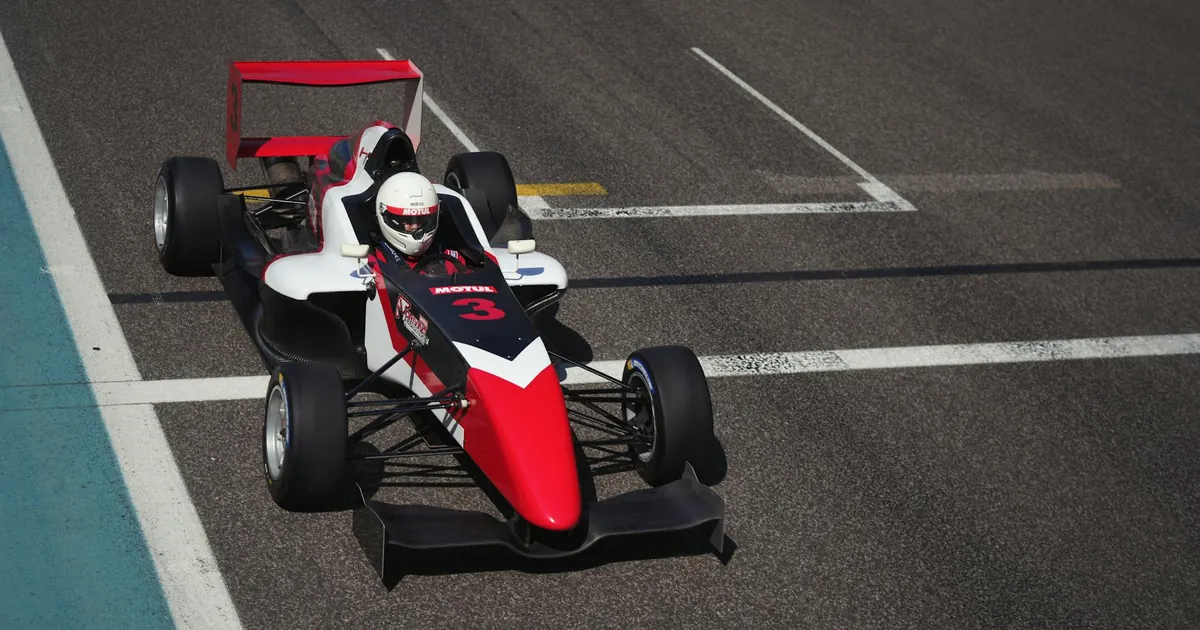
In sports, this conversion helps athletes and coaches optimize performance. A sprinter’s speed might be measured in m/s for biomechanical analysis, but fans and commentators often discuss it in km/h. For instance, Usain Bolt’s 100-meter world record of 9.58 seconds translates to an average speed of 10.44 m/s, or 37.58 km/h. This dual perspective helps both scientists and spectators appreciate the athlete’s achievement. Similarly, in motorsports, engineers use m/s to calculate braking distances and cornering speeds, while broadcasters use km/h to make the numbers relatable to viewers.
Climate science also relies on this conversion. Wind speeds, for example, are often reported in km/h for public weather forecasts but converted to m/s for scientific modeling. A hurricane’s 200 km/h winds become 55.56 m/s in climate models, where even small variations can significantly impact predictions. This conversion ensures consistency across global datasets, allowing researchers to compare storms from different regions and time periods accurately. Without it, tracking climate trends or issuing timely warnings would be far more challenging.
Step-by-Step Guide to Manual Conversion
Converting km/h to m/s manually is straightforward if you follow these steps. Let’s use 80 km/h as an example. First, write down the conversion factor: 1 km/h = 0.27778 m/s. Next, multiply your speed (80 km/h) by this factor: 80 × 0.27778 = 22.2224 m/s. That’s it! For most purposes, you can round this to 22.22 m/s. If you prefer using the fraction method, multiply by 5/18 instead: 80 × 5/18 = 22.22 m/s. Both methods yield the same result, so choose the one that feels more intuitive.
For those who prefer a more visual approach, here’s a breakdown using unit cancellation. Start with 80 km/h and multiply by the conversion factors for kilometers to meters and hours to seconds:
- 80 km/h × (1,000 m / 1 km) = 80,000 m/h
- 80,000 m/h × (1 h / 3,600 s) = 22.22 m/s
This method reinforces why the conversion works—it’s all about replacing the original units with their equivalents in meters and seconds. While it’s more steps, it’s a great way to understand the underlying math if you’re new to unit conversions.
Using a Calculator for Quick Conversions

If manual calculations aren’t your style, a calculator can speed up the process. Most scientific calculators have a unit conversion function, but even a basic one will do. Simply enter the speed in km/h, multiply by 0.27778 (or divide by 3.6), and you’re done. For example, to convert 150 km/h to m/s, type 150 × 0.27778, which gives you 41.667 m/s. Many smartphones also have built-in unit converters in their calculator apps, so you can do this on the go.
For frequent conversions, consider creating a spreadsheet with the formula pre-programmed. In Excel or Google Sheets, you can use the formula =A10.27778, where A1 is the cell containing your km/h value. This is especially useful for engineers or researchers who need to convert large datasets. Online tools like ConvertUnits or Calculator.net also offer quick conversions, though it’s always good to verify their results manually if precision is critical.
Converting Back: m/s to km/h
Sometimes, you’ll need to reverse the process—converting m/s back to km/h. The formula for this is speed in km/h = speed in m/s × 3.6. For example, if you have a speed of 10 m/s, multiplying by 3.6 gives you 36 km/h. This is the inverse of the km/h to m/s conversion, and it’s just as straightforward. The key is remembering that multiplying by 3.6 (or dividing by 0.27778) takes you from m/s to km/h, while multiplying by 0.27778 (or dividing by 3.6) takes you from km/h to m/s.
This reverse conversion is common in fields like fluid dynamics, where wind tunnel tests often measure speeds in m/s, but the results need to be reported in km/h for practical applications. For instance, a wind tunnel might measure a car’s drag at 30 m/s, but engineers need to know this is equivalent to 108 km/h to relate it to real-world driving conditions. Understanding both conversions ensures you can move seamlessly between scientific and practical contexts.
Why This Conversion Matters in Science and Engineering
In science and engineering, unit consistency is non-negotiable. The km/h to m/s conversion is a prime example of how standardized units enable collaboration and innovation. Take the field of robotics, for example. A robot’s speed might be programmed in m/s for precise movement control, but its performance is often evaluated in km/h to compare it to human or vehicle speeds. Without this conversion, engineers would struggle to communicate specifications or optimize designs for real-world use.
In physics, this conversion is fundamental to kinematics—the study of motion. Equations like v = u + at (where v is final velocity, u is initial velocity, a is acceleration, and t is time) require consistent units. If you’re given a car’s acceleration in m/s² but its speed in km/h, you’d need to convert the speed to m/s before plugging it into the equation. This ensures all terms are compatible and the result is meaningful. Similarly, in projectile motion problems, converting initial velocities from km/h to m/s is often the first step in solving for range or maximum height.
Even in environmental science, this conversion plays a role. For example, oceanographers measure current speeds in m/s for modeling purposes, but these speeds are often reported in km/h for public awareness campaigns. A current moving at 1 m/s might not sound impressive, but when converted to 3.6 km/h, it becomes easier to visualize its impact on shipping or coastal erosion. This dual perspective is essential for bridging the gap between technical research and public understanding.
Key Takeaways
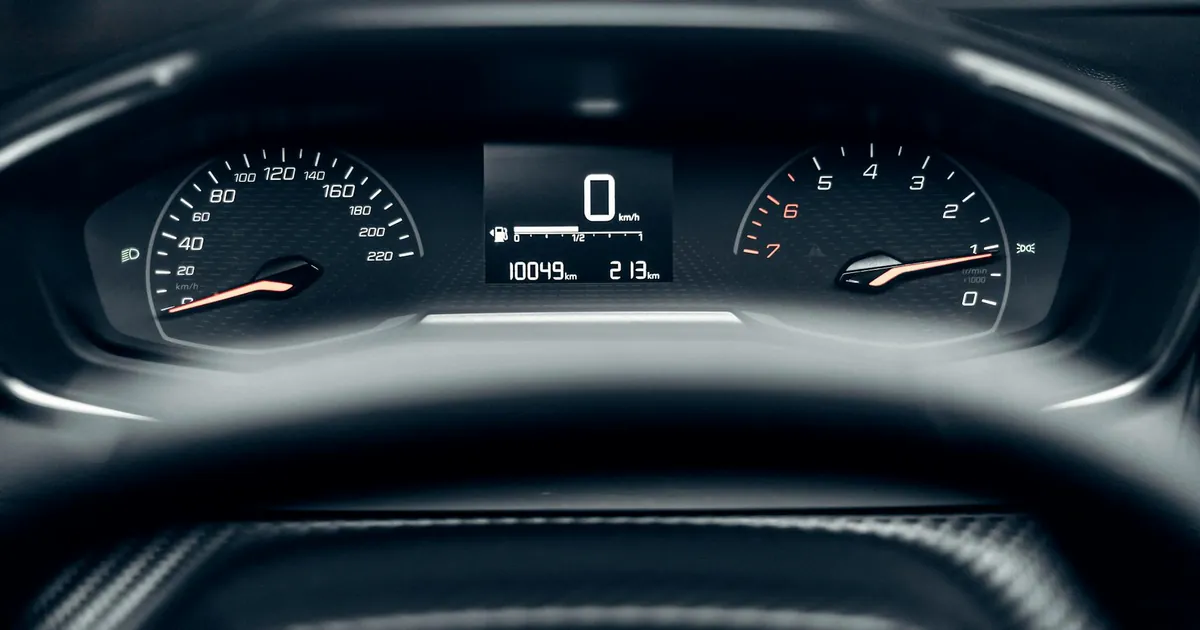
- The formula to convert km/h to m/s is speed in m/s = speed in km/h × 0.27778 (or divide by 3.6).
- This conversion is essential for scientific precision, engineering applications, and real-world comparisons like aviation and sports.
- The factor 0.27778 comes from the relationship between kilometers and meters (1,000) and hours and seconds (3,600).
- Common mistakes include mixing up the conversion factor, ignoring significant figures, and confusing units.
- Manual conversion can be done using the formula, unit cancellation, or calculators for quick results.
- Reversing the process (m/s to km/h) requires multiplying by 3.6 instead of 0.27778.
- Understanding this conversion enhances your ability to work across disciplines, from physics to climate science.
“Unit conversions like km/h to m/s might seem trivial, but they’re the backbone of interdisciplinary collaboration. In my work with autonomous vehicles, a single misplaced decimal in a speed conversion can mean the difference between a safe stop and a collision. Precision isn’t just about numbers—it’s about trust in the systems we build.”
— Dr. Elena Vasquez, Robotics Engineer at MIT
Frequently Asked Questions
Why do we need to convert km/h to m/s?
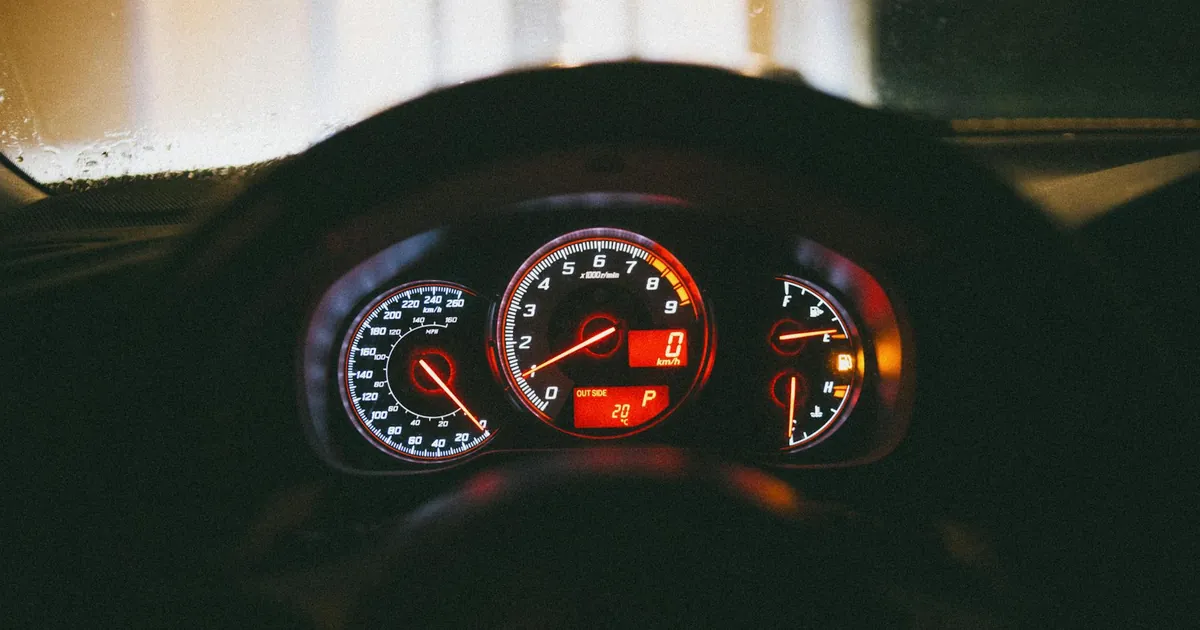
Converting km/h to m/s is necessary because different fields use different units for speed. While km/h is practical for everyday measurements (like driving), m/s is the standard in scientific and engineering contexts where precision is critical. For example, physicists use m/s in equations of motion, while meteorologists use it to describe wind speeds in models. Without this conversion, comparing or combining data from these fields would be impossible. It’s like trying to add apples and oranges—you need a common unit to make sense of the numbers.
Is there a difference between 0.27778 and 5/18 for conversion?
No, there’s no difference in the result—0.27778 and 5/18 are mathematically equivalent. The decimal form (0.27778) is derived from dividing 1,000 by 3,600, while the fraction (5/18) is a simplified version of the same ratio. The choice between them comes down to convenience. The decimal is easier for calculators, while the fraction is quicker for mental math. For example, converting 90 km/h using 5/18 gives 25 m/s instantly, whereas 90 × 0.27778 requires more steps. Both are correct, so use whichever you find more intuitive.
How do I convert km/h to m/s without a calculator?
To convert km/h to m/s without a calculator, use the fraction 5/18. Multiply your speed in km/h by 5, then divide by 18. For example, to convert 72 km/h: 72 × 5 = 360, then 360 ÷ 18 = 20 m/s. This method works because 5/18 is a simplified version of the conversion factor. For even quicker estimates, you can divide by 3.6 (since 1/3.6 ≈ 0.27778), but this requires more mental effort. Practice with a few examples, and you’ll get the hang of it!
What are some real-world examples of this conversion?
Real-world examples of this conversion are everywhere. In aviation, a commercial jet’s cruising speed of 900 km/h converts to 250 m/s, a figure used in flight simulations and fuel calculations. In sports, a soccer ball kicked at 100 km/h travels at ~27.78 m/s, which physicists use to study aerodynamics. Even in weather forecasting, a storm’s 120 km/h winds become 33.33 m/s in climate models, helping scientists predict its path and intensity. These examples show how the conversion bridges the gap between human-scale measurements and technical precision.
Can I use this conversion for other units like mph?
Yes, but you’ll need a different conversion factor. To convert miles per hour (mph) to m/s, multiply by 0.44704. For example, 60 mph × 0.44704 = 26.82 m/s. This works because 1 mile equals 1,609.34 meters, and 1 hour equals 3,600 seconds, so the conversion factor is 1,609.34/3,600 ≈ 0.44704. The process is the same as converting km/h to m/s, but the numbers change because miles and kilometers are different units of distance. Always double-check the conversion factor when switching between imperial and metric units.
Why is m/s the standard in science?
The meter per second (m/s) is the standard in science because it’s part of the International System of Units (SI), which is the most widely used measurement system globally. SI units are designed to be consistent and scalable, making them ideal for scientific work. Meters and seconds are base units in this system, so m/s naturally fits into equations and models. Additionally, m/s is more precise for small-scale measurements, like the speed of sound (343 m/s) or the velocity of particles in physics experiments. While km/h is practical for everyday use, m/s provides the granularity needed for technical and scientific applications.
What’s the fastest way to convert km/h to m/s in Excel?
The fastest way to convert km/h to m/s in Excel is to use the formula =A10.27778, where A1 is the cell containing your km/h value. For example, if A1 has 100 km/h, the formula will return 27.778 m/s. You can also use =A1/3.6 for the same result. To apply this to an entire column, drag the fill handle (the small square at the bottom-right corner of the cell) down the column. This method is efficient for large datasets, like converting a list of vehicle speeds or wind measurements. For added clarity, you can label the column “Speed (m/s)” to avoid confusion.
Mastering the conversion from km/h to m/s is more than just a mathematical exercise—it’s a skill that enhances your ability to navigate the worlds of science, engineering, and everyday life with confidence. Whether you’re calculating the speed of a race car, analyzing wind patterns, or simply satisfying your curiosity about how fast things move, this conversion is a tool you’ll return to time and again. The next time you see a speed limit sign or a weather report, take a moment to convert it to m/s. You’ll gain a new perspective on the numbers and a deeper appreciation for the precision that makes modern technology possible. Ready to put this into practice? Grab a calculator, pick a speed, and start converting—you’ll be surprised how quickly it becomes second nature.